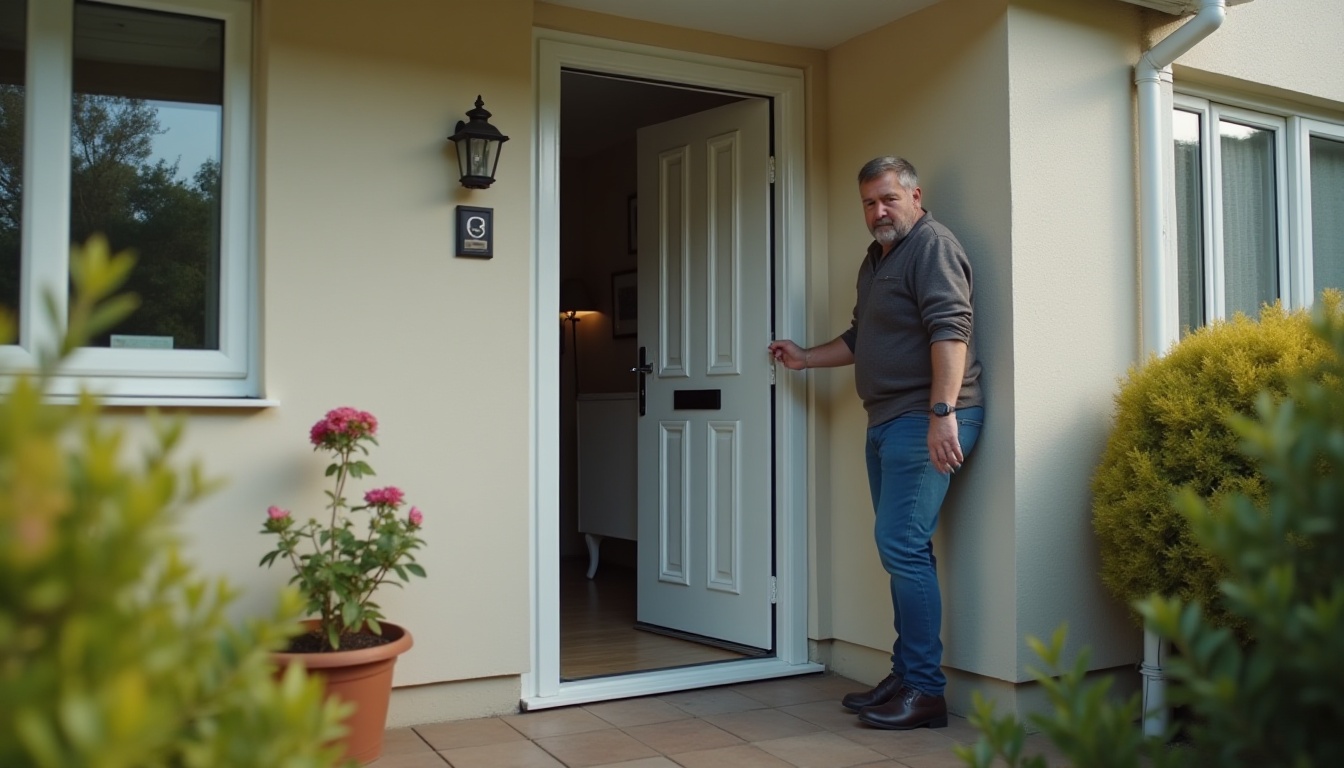
uPVC door lock problems often develop gradually. A handle that needs an extra lift, a key that becomes stiff or a door that only locks when pushed or pulled can be early signs that something is no longer working as it should. Ignoring those changes can turn a manageable adjustment or repair into a lockout or a more expensive failure.
Modern uPVC doors often use a multipoint locking system. The exact design varies, but hooks, rollers or bolts may engage at several positions along the door when the handle is operated. The cylinder and key then secure the mechanism. Because several parts work together, the symptom you notice at the key is not always caused by the cylinder itself.
Common uPVC door lock problems and what they can mean
One of the most common signs is a handle that has become unusually stiff. You might need to lift it higher than before or apply extra pressure before the key turns. Another warning sign is a door that locks easily when open but becomes difficult when closed.
That difference can suggest alignment rather than an internal lock failure. Doors and frames can move slightly over time, hinges can wear or need adjustment, and changes in temperature can affect how a door sits. The locking points may then meet the keeps in the frame less cleanly.
If the handle or key is difficult both when the door is open and when it is closed, the mechanism or cylinder may require closer attention.
Do a simple open-door comparison
If it is safe to do so, open the door and operate the handle gently without forcing anything. Compare how it feels with the door closed. Do not throw the locking points and then slam the door, because projecting hooks or bolts can strike the frame.
If everything moves freely while open but becomes stiff when the door meets the frame, note that information. It can be useful to a locksmith because it helps distinguish a possible alignment issue from a mechanism that is stiff all the time.
Do not dismantle the multipoint strip or remove internal components unless you know exactly what you are doing. A partly disassembled door can become difficult to secure.
Warning signs that deserve attention
Arrange an assessment if the problem is getting worse, if the handle feels loose or fails to return normally, if the key catches repeatedly, or if the door needs significant force to lock. Grinding, sudden changes in resistance or a mechanism that intermittently refuses to operate are also reasons not to postpone action.
Another important warning is having to pull the door hard toward the frame while turning the key. That may work temporarily, but repeated strain can place additional load on the mechanism.
With uPVC door lock problems, forcing the key is particularly risky because a broken key can create an additional problem while the door is still locked.
Check how you normally secure the door
Police.uk explains that modern multi-locking and uPVC doors need the locking points to be engaged correctly. Its advice is to lift the handle, lock and remove the key when leaving. You can read the current Police.uk door and window lock advice.
If household members have different habits, make sure everyone understands how the particular door is intended to work. A system that is not fully engaged may not provide the security expected from it.
Could the euro cylinder be the problem?
Sometimes it can. If the key is difficult to insert or turn even when the door is open and the multipoint mechanism is not under pressure, the cylinder may need inspection. Worn keys can also contribute to poor operation.
If a cylinder needs replacement, consider its security rating as well as basic compatibility. Police.uk advises choosing a 3-star euro cylinder meeting TS007 standards when changing door locks. Correct sizing and fitting matter too; a suitable component poorly fitted is not a good upgrade.
Do not rely on excessive lubricant
People often reach for a general-purpose spray when a lock becomes stiff. The correct treatment depends on the lock and manufacturer’s guidance, and flooding a mechanism with an unsuitable product can attract dirt or create other problems.
If the cause is misalignment, lubrication will not correct the geometry of the door. If a component is worn or damaged, it will not restore the missing material. Treat stiffness as a symptom to diagnose rather than something automatically cured with spray.
When the door will not lock at all
If the door cannot be secured, treat it as a security issue. Avoid leaving the property unattended with an unsecured external door. If the problem occurs outside normal working hours, explain clearly that the door cannot be locked when contacting a locksmith so they can advise on urgency.
If you are comparing local help with uPVC door lock problems, you can browse locksmiths serving Plymouth on Plymouth Trade Finder. Confirm that the business handles uPVC and multipoint door systems and ask about call-out charges before booking.
Repairing the cause rather than the symptom
A good repair should address why the door became difficult, not simply make it work once. That may involve alignment, hinges, keeps, the cylinder, handle components or the multipoint mechanism itself. The correct solution depends on inspection.
If one component has failed because the door has been operating under strain, replacing only that component without correcting the strain may allow the same problem to return. Ask what caused the failure and whether any adjustment is needed alongside the part replacement.
Act before a minor problem becomes a lockout
The best time to deal with many uPVC door lock problems is while the door still opens and closes. A gradual increase in stiffness, inconsistent locking or the need for extra force is useful warning information.
Stop forcing the mechanism, compare operation with the door open and closed, and arrange professional assessment if the problem persists. Early attention can protect the door, reduce unnecessary strain on the locking system and lower the chance of finding yourself unable to secure or open the property later.