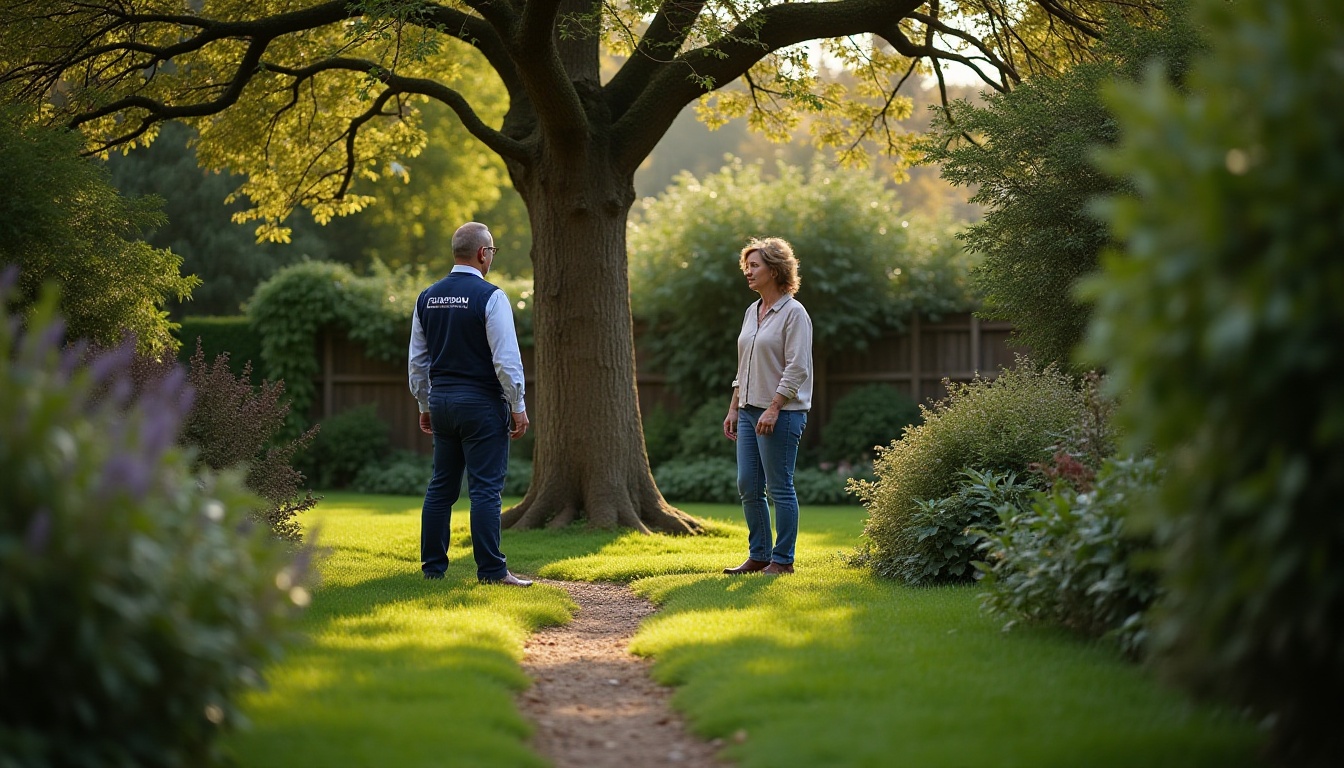
If your project involves protected trees Plymouth rules need to be checked before a landscaper starts pruning, excavation or construction nearby. A mature tree can be central to a garden design, but legal protection may restrict work to the tree itself, and good construction practice should also consider roots and soil around it. Establishing protection early is far easier than trying to change a patio, wall or access route after work has begun.
Protected trees Plymouth homeowners should identify first
Plymouth City Council explains that Tree Preservation Orders, usually called TPOs, can protect individual trees, groups or woodland. Work such as cutting down, topping, lopping, uprooting, damaging or destroying a protected tree generally requires approval. The council provides information and mapping on its Tree Preservation Orders page.
Do not rely solely on whether a previous owner mentioned a TPO. Check the current position for the property. Plymouth City Council also notes that its interactive map is regularly updated but may not display the most recently made orders, so contact the council where certainty is needed.
Conservation areas can protect trees even without a TPO
A tree does not have to appear in a TPO to be subject to controls. Plymouth City Council states that, in a conservation area, notice is normally required before carrying out work to qualifying trees. Its current guidance says six weeks’ notice is required for relevant tree work in conservation areas, subject to the applicable rules and exceptions.
This matters during landscaping because removing or substantially pruning a tree may appear to be ordinary site preparation. If the garden is within a conservation area, that assumption can be wrong. Check the property’s status during the design stage, not when contractors arrive with a start date.
Planning conditions can be another form of protection
The council also advises that trees can be protected through planning conditions. If a property has been subject to relatively recent development or planning permission, review the relevant decision documents for landscaping or tree-retention conditions. A tree may therefore require consideration even if the TPO map does not show an order.
For major alterations, an arboricultural professional or planning adviser may be needed to interpret constraints. A landscaper should not be expected to make legal determinations outside their competence, although an experienced business should recognise when additional checks are sensible.
Roots are part of the tree even when you cannot see them
Landscaping can affect a tree without touching its trunk or branches. Excavation for paving, walls or level changes can cut roots, while repeated vehicle movement or material storage can compact soil and reduce conditions for roots. Raising levels or placing impermeable construction over significant rooting areas can also alter the environment around the tree.
That means “we are not doing any tree work” is not necessarily the end of the conversation. If construction is close to an important tree, ask how its rooting area will be protected and whether specialist arboricultural advice is required. The appropriate solution depends on tree size, species, condition and the proposed works.
Design around the tree before choosing hard landscaping
A mature tree can become an asset to the design by providing scale, shade and seasonal character. Instead of deciding on a large patio first and then trying to fit the tree around it, begin with the tree’s needs and the household’s use of the garden. Seating may work well in partial shade, while planting beneath the canopy can be selected for the actual light and soil conditions.
Allow for future growth. Trunks and roots increase in size, branches move in wind and leaves or fruit may fall. A surface or structure fitted tightly around a tree today may create problems later. Good design leaves appropriate space and accepts that living features change over time.
Checks to make before landscaping near a mature tree
- Is the tree covered by a Tree Preservation Order?
- Is the property in a conservation area?
- Are there planning conditions relating to retained trees?
- Does the proposal include pruning, root disturbance or excavation nearby?
- Will machinery, skips or material storage affect the soil around the tree?
- Could a change of level alter root conditions?
- Is arboricultural advice needed before the landscaping is designed?
Permissions should be reflected in the project programme
Plymouth City Council has a specific process for applications to work on protected trees and for conservation-area notifications. If approval or notice is required, allow that process for the project programme. Do not book irreversible site work on the assumption that consent will be immediate or automatic.
Make clear who is responsible for the application and who will provide any tree-work specification. If an arborist and landscaper are both involved, they should work from the same agreed scope so that one contractor does not unknowingly undermine the other’s requirements.
Emergency danger is a special situation
The council’s guidance recognises circumstances where a tree or branch is immediately dangerous and minimum work may be undertaken to make it safe. This is not a general shortcut for routine landscaping. Where immediate danger is claimed, document the circumstances and follow current council guidance about what should be done and what evidence may be required.
Routine pruning to improve a view, increase light or make room for a patio should be treated as planned work and checked through the normal process when the tree is protected.
Choose contractors who recognise the boundary of their expertise
A landscaper does not need to be a tree surgeon to work in a garden containing trees, but they should take tree constraints seriously. Ask what they would do if excavation exposes significant roots or if the proposed design conflicts with protection advice. For specialist pruning or arboricultural assessment, use a suitably competent tree professional.
You can browse landscapers serving Plymouth when planning the wider garden project. Discuss protected trees at the first site visit and independently verify permissions with Plymouth City Council where relevant.
Keep records with the project documents
Retain copies of applications, notices, decisions, arboricultural advice and the final landscape plan. If conditions specify protective measures, make sure everybody working on site has access to them. A requirement hidden in an email is of little use if the person operating machinery has never seen it.
For projects involving protected trees Plymouth requirements should therefore be treated as an early design constraint, not a final administrative check.
When working around protected trees Plymouth homeowners are best served by checking legal status first, designing around the tree second and scheduling construction only after the necessary permissions and protection measures are understood. That sequence helps protect both an important landscape feature and the wider garden investment.