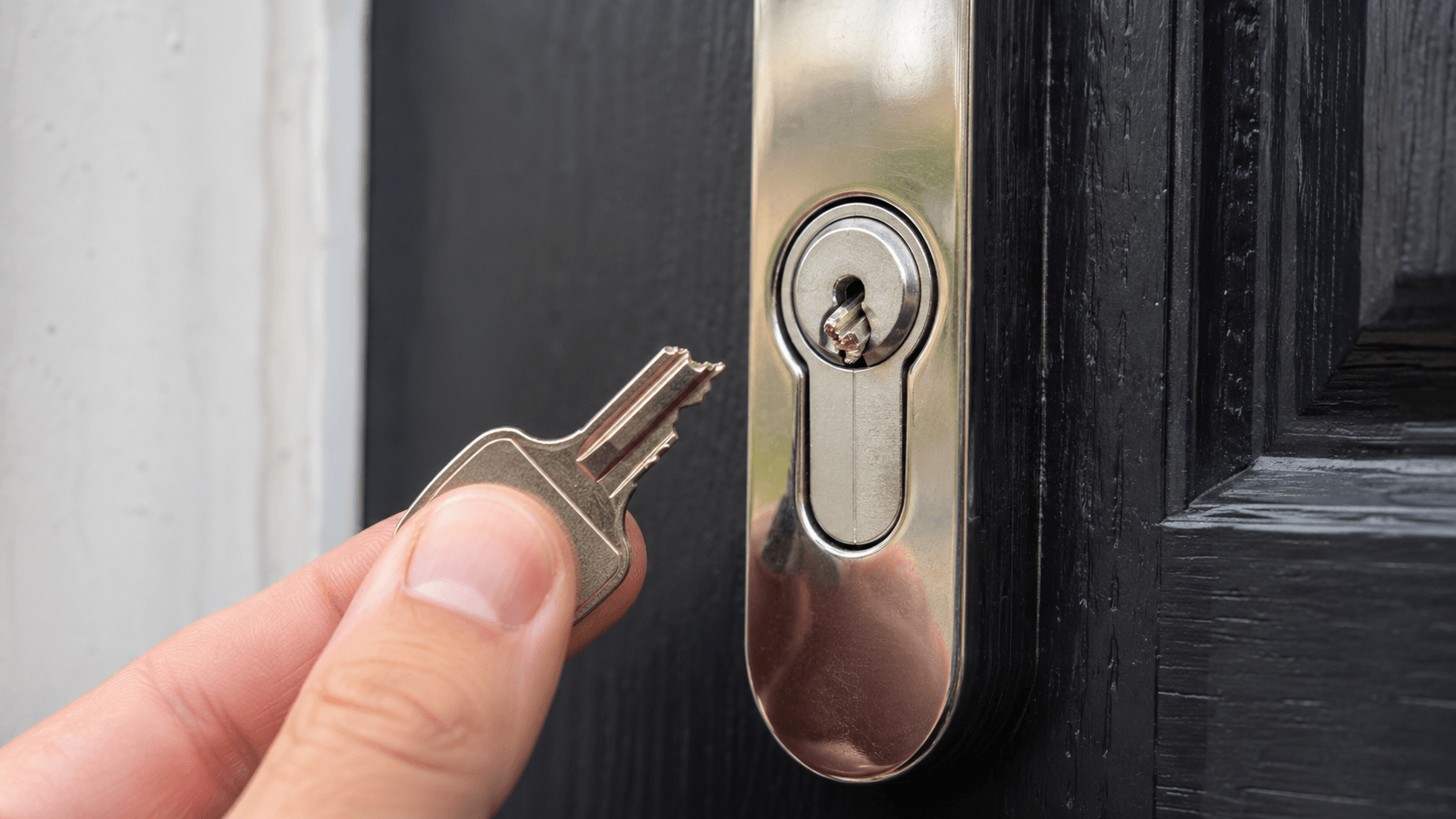
A broken key in lock can be a minor inconvenience or the start of a much bigger problem, depending on what you do next. The safest first response is usually to stop turning, pulling or pushing the remaining fragment and assess whether the door is open, closed, locked or unlocked.
Repeated force can drive the fragment farther into the cylinder, damage internal components or leave another piece behind. The objective is to preserve the lock and door until you know whether the key can be removed cleanly.
Broken key in lock: stop using force
If part of the key is still protruding, resist the temptation to twist it with pliers while the lock is under load. If the fragment is flush or recessed, do not push another key, screwdriver, pin or improvised object into the keyway.
Also avoid drilling the cylinder simply because a key is stuck. Destructive entry may turn a straightforward extraction into a full replacement and can damage surrounding hardware.
If the door is open, leave it open while you work out the next step, provided it is safe to do so. Closing a door with an unusable lock can create a lockout.
Why do keys break?
Keys can fatigue after years of use, especially if they are bent or worn. A poor duplicate may also fit less smoothly. Sometimes the key is only the victim of another problem: a stiff cylinder, misaligned door or multipoint mechanism may require excessive turning force.
If the key had become difficult to use before it snapped, tell the locksmith. Simply extracting the fragment and cutting another copy may not address the cause.
A replacement key should not need significant force to operate a healthy, correctly aligned lock.
Can you remove the fragment yourself?
If a large piece is protruding freely and the lock is in its normal neutral position, it may sometimes be possible to withdraw it gently without inserting anything else. Stop immediately if it resists.
For a fragment sitting inside the keyway, specialist extraction tools and experience are safer than improvised hooks, glue or screws. Online methods can look simple because they omit failed attempts and resulting damage.
If you cannot remove the fragment without force, arrange professional help.
Do not use glue
Trying to glue the two halves of a key together while one half remains in the cylinder is risky. Adhesive can enter the keyway and bond parts that are supposed to move freely.
The same concern applies to adding substances that were never intended for the lock. If lubrication is appropriate, use only a product suitable for that lock and follow manufacturer guidance; do not flood the keyway with whatever spray happens to be nearby.
Consider whether the door is secure
A broken key in lock is more urgent when it prevents an external door from being locked. If the property cannot be secured, tell the locksmith that clearly when calling.
If the key broke while the door was locked and you are outside, treat the problem as a lockout. Avoid climbing through unsafe windows or forcing another entrance.
If the fragment is visible from outside, do not leave the property unattended if that creates an obvious security concern.
What a locksmith may need to assess
The locksmith will usually want to know the type of door, whether you have another working key, where the fragment sits, whether the lock was stiff beforehand and whether the door is currently open or closed.
Once the fragment is removed, the lock should be tested before assuming everything is solved. A stiff multipoint door, worn cylinder or misalignment may have contributed to the breakage.
If you want to find local help with a broken key in lock, you can browse locksmiths serving Plymouth on Plymouth Trade Finder and confirm relevant services and pricing directly.
If the cylinder needs replacement
Replacement is not automatically required simply because a key snapped. If the cylinder is damaged, badly worn or due for a security upgrade, however, replacement may be the sensible option.
For euro-profile cylinders, Police.uk advises choosing a 3-star cylinder meeting TS007 standards when changing door locks. Its door and window lock advice explains the recommendation and other home-security measures.
Ask what has failed, what is being replaced and why the proposed part is suitable.
Do not copy a badly worn key blindly
If the broken key is heavily worn or bent, cutting future copies from it may reproduce poor geometry. Where possible, use a sound original or ask the locksmith what source should be used for the replacement.
Check all spare keys and discard obviously damaged ones once you have reliable replacements.
Watch for early warning signs next time
Keys usually give some warning before a serious failure. Look for bending, cracks, excessive wear or a need to wiggle the key repeatedly. A lock that has become stiff or inconsistent also deserves attention before it traps or breaks a key.
On uPVC and composite doors, difficulty may come from alignment or the multipoint mechanism rather than only the cylinder. If the door needs to be pulled, pushed or lifted unusually hard before the key turns, arrange an assessment.
Keep a simple problem from becoming a larger repair
With a broken key in lock, patience is valuable. Do not push the fragment deeper, add glue, drill the lock or apply more force than you were using when the key failed.
Keep the broken pieces, note whether the lock was already stiff and explain the symptoms accurately. A clean extraction and proper diagnosis can often preserve more of the existing hardware and reduce the chance of the same problem happening again.