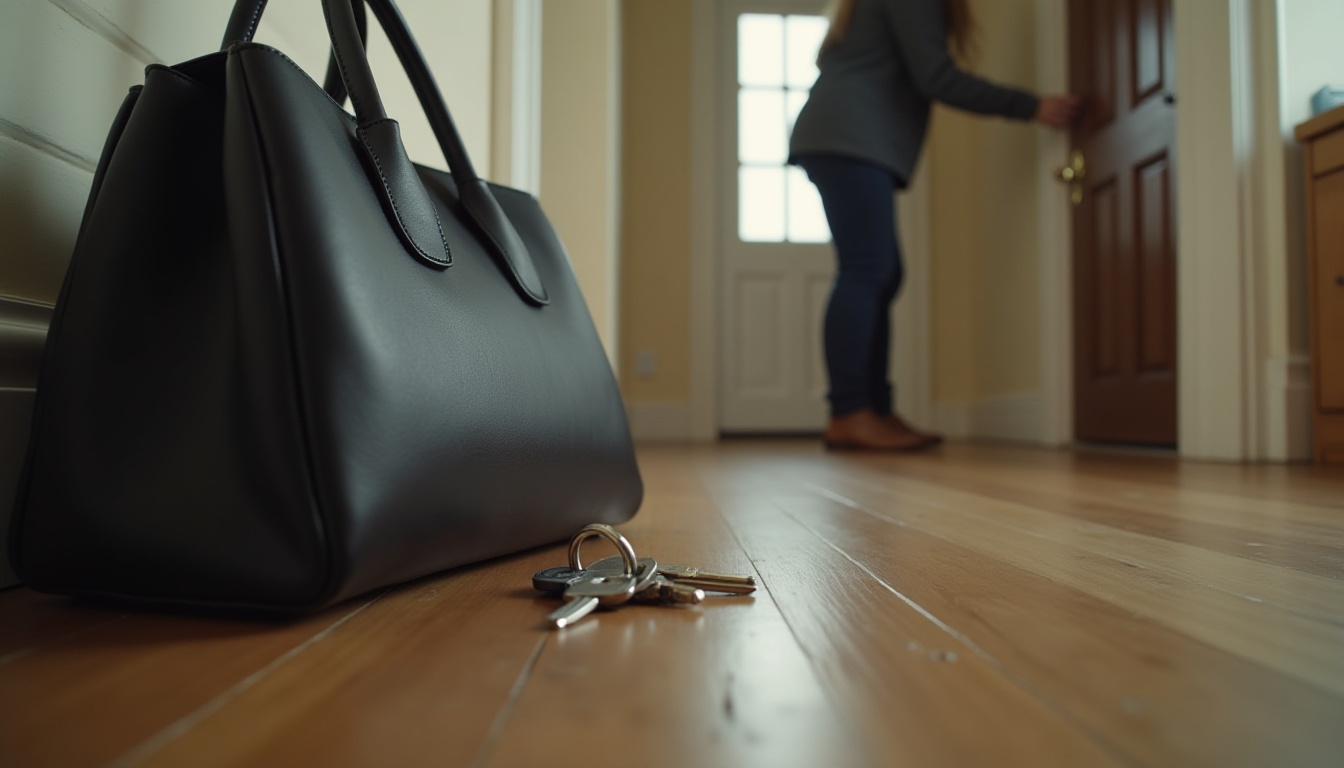
Lost house keys are frustrating, but the important question is not only how to get another key. You also need to decide whether the missing key could realistically be used to enter your home. Sometimes the risk is low; in other situations, changing or rekeying a lock is a sensible precaution.
The answer depends on where the key went missing, whether it was stolen, what else disappeared with it and whether anyone could connect it to your address. Treat those factors separately rather than assuming every missing key requires exactly the same response.
Lost house keys: start by assessing what actually happened
Think back to when you last definitely had the keys. Check clothing, bags, vehicles, workspaces and the places you visited. If there is a reasonable chance they are simply misplaced inside a secure location, the immediate security concern is different from a set stolen with a wallet or bag.
If you believe theft has occurred, consider reporting the incident to the police using the appropriate route. If there is an immediate danger or a crime is in progress, use the emergency services; otherwise follow the non-emergency reporting options for your area.
Do not publish detailed photographs of the missing keys on social media. Key shapes and identifying tags can reveal more than intended.
Could someone connect the keys with your home?
This is one of the most useful questions to ask. Keys lost on their own, with nothing identifying the owner, may present a lower risk than keys taken with a driving licence, correspondence, work pass, labelled keyring or bag containing an address.
Also consider where they were lost. A set dropped somewhere far from home with no identifying information is different from a set stolen just outside your property or taken during a burglary.
If you cannot confidently rule out a connection to your address, changing the affected locks may give you greater control over who can enter.
Do you need a whole new lock?
Not necessarily. Depending on the type of lock and door, a locksmith may be able to replace a cylinder or another component rather than the complete locking mechanism. The important outcome is that the missing key no longer operates the door where that is the chosen security response.
Ask what part is being replaced and why. If a euro-profile cylinder is being changed, this can also be an opportunity to review the security standard. Police.uk advises householders changing door locks to choose a 3-star euro cylinder meeting TS007 standards. See its door and window lock guidance for current crime-prevention advice.
Consider every key on the missing set
Lost house keys may include more than the front door key. Check whether the set also opened a back door, garage, shed, side gate, communal entrance, office, storage unit or another property. A replacement plan should reflect the whole set rather than concentrating on one lock.
For flats, tell the managing agent or landlord if a communal key, fob or access device has gone missing. They can advise what action is appropriate for the building’s shared-access system.
If a car key was also lost, deal with that separately using appropriate vehicle-security advice.
What if the keys were stolen during a burglary?
If someone has already entered your home and taken keys, security should be reviewed as part of the response to the break-in. The police or your insurer may have specific instructions, and damaged doors or windows may need temporary securing before permanent repairs.
Do not disturb a crime scene unnecessarily before the police have advised you what to do. Once they have finished any required examination, review all keys that may have been taken, including spare sets.
Check your insurance requirements
Home-insurance policies differ. If keys were stolen, a policy may contain relevant cover or conditions, but you should not assume what your insurer will pay. Contact the insurer and follow the policy wording, especially if there has been theft or burglary.
Keep receipts and records for authorised emergency or security work if you may need to make a claim.
Choosing replacement security
If replacement is appropriate, use the opportunity to check whether the existing setup still suits the property. The aim is not to buy the most elaborate lock available; it is to use compatible, correctly fitted security appropriate to the door.
Police.uk recommends using secure doors and windows and specifically highlights properly operating multipoint locks on modern and uPVC doors. With these doors, lifting the handle may engage the locking points, but the key still needs to be turned and removed to secure the system as intended.
If you need local help assessing lost house keys and replacement options, you can view locksmiths serving Plymouth on Plymouth Trade Finder. Check services, availability, pricing and suitability directly with each business.
What about spare keys?
Once the issue is resolved, rethink where spare keys are kept. Avoid obvious outdoor hiding places such as beneath a mat or plant pot. A spare held by a trusted person may be more useful, provided you are comfortable with that arrangement.
Keep track of how many copies exist. When you give a key to a contractor, cleaner, former housemate or temporary occupant, have a plan for its return or for changing access later where appropriate.
If you later find the missing key
If the locks have already been changed, finding the old key does not mean you need to reverse the decision. Keep or dispose of the old key appropriately and make sure it cannot be confused with current keys.
If you decided not to change the lock and the key later reappears, think about whether it was out of your control during the missing period. If someone else could have copied or handled it, you may still decide that changing access is worthwhile.
Make the decision based on risk, not panic
There is no universal rule that all lost house keys require every lock in a property to be replaced. The sensible response depends on whether the key identifies the home, whether it was stolen, what it opens and who may have had access to it.
Work through those points methodically. Where the connection to your property is clear or the circumstances are suspicious, prompt action can restore control over access. Where the risk is genuinely low, a locksmith can explain whether a new key, cylinder change or other proportionate solution is appropriate.