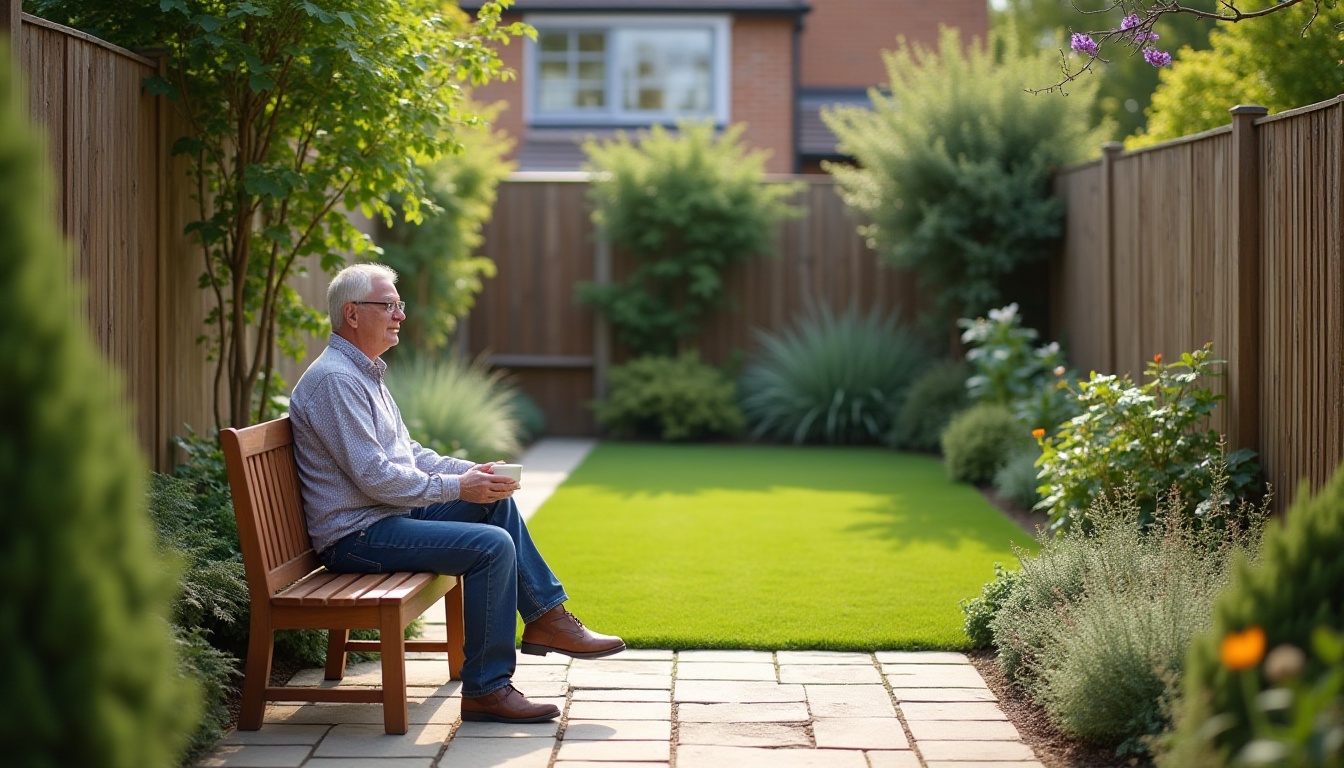
Low-maintenance garden ideas work best when they remove recurring jobs rather than simply replacing plants with hard surfaces. Every garden needs some care, but a thoughtful layout can reduce mowing, edging, watering, pruning and seasonal replanting while still providing an attractive green space. The key is to decide which gardening activities you enjoy and which ones you would prefer to minimise, then design around that reality.
Low-maintenance garden ideas start with a simpler layout
Complex shapes create work. Narrow strips of lawn, tiny beds, numerous changes of material and awkward corners all take time to edge, clean and maintain. A simpler plan with clear routes, generous planting areas and fewer fiddly transitions can be easier to look after without feeling empty. Repetition also helps: using a limited palette of materials and repeating groups of reliable plants creates visual coherence with less decision-making and replacement.
Think about access for maintenance from the beginning. If a hedge will need clipping, can both sides be reached? If a border is deep, is there a sensible way to tend it without stepping on the soil? If furniture must be moved every time the lawn is cut, would a different layout work better? These practical details often make more difference to future effort than any single product.
Reduce lawn work rather than assuming all grass must go
A lawn can be useful for play, pets and visual openness, but small awkward lawns can require disproportionate effort. Consider whether the lawn could become a simple shape that is quick to mow, with permanent edging to reduce trimming. In another garden, reducing the lawn area and increasing planted beds or permeable surfaces may make more sense.
The Royal Horticultural Society’s advice on low-maintenance gardening emphasises that no garden is truly maintenance-free and suggests considering lower-input alternatives to regular tasks. That is a more realistic goal than trying to eliminate all maintenance, which can lead to a garden dominated by surfaces that still require cleaning and weed control.
Choose plants for the place they will actually grow
Plants that constantly struggle with light, soil or exposure demand more watering, feeding, staking and replacement. Matching plants to the conditions is therefore one of the strongest low-maintenance strategies. Observe which areas are sunny, shaded, sheltered or exposed and discuss mature plant size before buying. A shrub planted in too small a space can become a permanent pruning job.
Use groups of plants with similar needs rather than scattering individual specimens throughout the garden. Larger blocks are usually easier to weed around and can create a stronger visual effect. A landscaper or planting designer can also help choose a backbone of dependable shrubs and perennials so that seasonal interest does not rely entirely on short-lived bedding.
Mulch can reduce several routine tasks
A suitable mulch over prepared soil can help suppress many annual weeds and reduce moisture loss. Organic mulches can also contribute to soil condition as they break down. The material and depth should suit the planting and site, and mulch still needs occasional topping up. It is not a substitute for removing established perennial weeds before a new scheme is planted.
For gravel or other loose finishes, edge details matter. Poorly contained material can migrate onto lawns and paths, creating extra sweeping and maintenance. The easiest garden is usually the one where materials stay where they were intended to be.
Be careful with the idea that paving means no maintenance
Hard landscaping can reduce some jobs, but patios and paths still require care. Debris accumulates, weeds can establish in joints or edges and shaded surfaces may become slippery. The amount of work depends on material, detailing, surrounding planting and exposure. Choose surfaces for function and appearance first, then ask what routine cleaning or maintenance they are likely to need.
Large areas of impermeable surfacing can also affect how rainfall behaves. Retaining planting and permeable areas where practical can make a garden feel softer while allowing water to reach the ground. Low maintenance should not mean ignoring drainage or creating unnecessary runoff.
Features that can simplify routine care
- Simple lawn shapes with accessible edges.
- Generous beds instead of many tiny planting pockets.
- Plants chosen for mature size and actual site conditions.
- Mulched borders after thorough weed preparation.
- Durable, well-detailed paths to reduce muddy desire lines.
- Storage positioned where tools and cushions are used.
- Fewer containers, particularly small pots that dry quickly.
- Easy access to all areas that need pruning or cleaning.
Design around the amount of watering you want to do
New planting needs establishment care, even when it is intended to become low maintenance later. Be realistic about who will water plants during dry periods after installation. Larger plants are not always the easiest option; they can require substantial establishment care. Once established, plants well matched to local conditions are generally easier to manage than thirsty or tender choices that need constant attention.
Containers are attractive but often demand frequent watering and feeding. If pots are important to the design, a smaller number of generous containers may be easier to manage than many small ones. Position them where watering is convenient and where they can remain safely accessible.
Think about hedges, fencing and boundaries over several years
A fast-growing hedge can give privacy quickly but may create frequent cutting. Slower-growing choices can reduce that burden where they are suitable. Timber fencing requires its own maintenance and eventual replacement, so compare the long-term tasks rather than assuming one boundary type is effortless.
Existing mature screening may be worth retaining if it is healthy and manageable. Removing everything during a makeover can create an immediate privacy problem and replace established structure with years of new maintenance.
Make maintenance part of the quotation
When discussing a redesign, ask the landscaper what regular jobs the proposed garden will create. How often is a hedge likely to need attention? Will a surface need sealing or special cleaning? How should new planting be watered? Are plants expected to be cut down annually? This conversation can expose choices that look good on paper but do not suit your lifestyle.
You can browse landscapers serving Plymouth and ask individual businesses about low-maintenance design and planting. Compare their ideas and check what aftercare is included or recommended.
Keep the parts of gardening you enjoy
The best low-maintenance garden ideas do not remove personality. If you enjoy growing herbs, keep a useful herb bed. If you like seasonal colour, concentrate it in one accessible area. If you enjoy mowing but dislike weeding, retain a straightforward lawn and simplify the borders. Designing around your preferences makes it more likely that the garden will continue to be cared for.
Used this way, low-maintenance garden ideas are not shortcuts so much as choices that remove repetitive work while preserving the parts of the garden that matter to you.
A lower-maintenance garden is ultimately about using time well. Clear shapes, appropriate plants, practical access and realistic material choices can reduce repetitive work while keeping the space green, useful and enjoyable throughout the year.