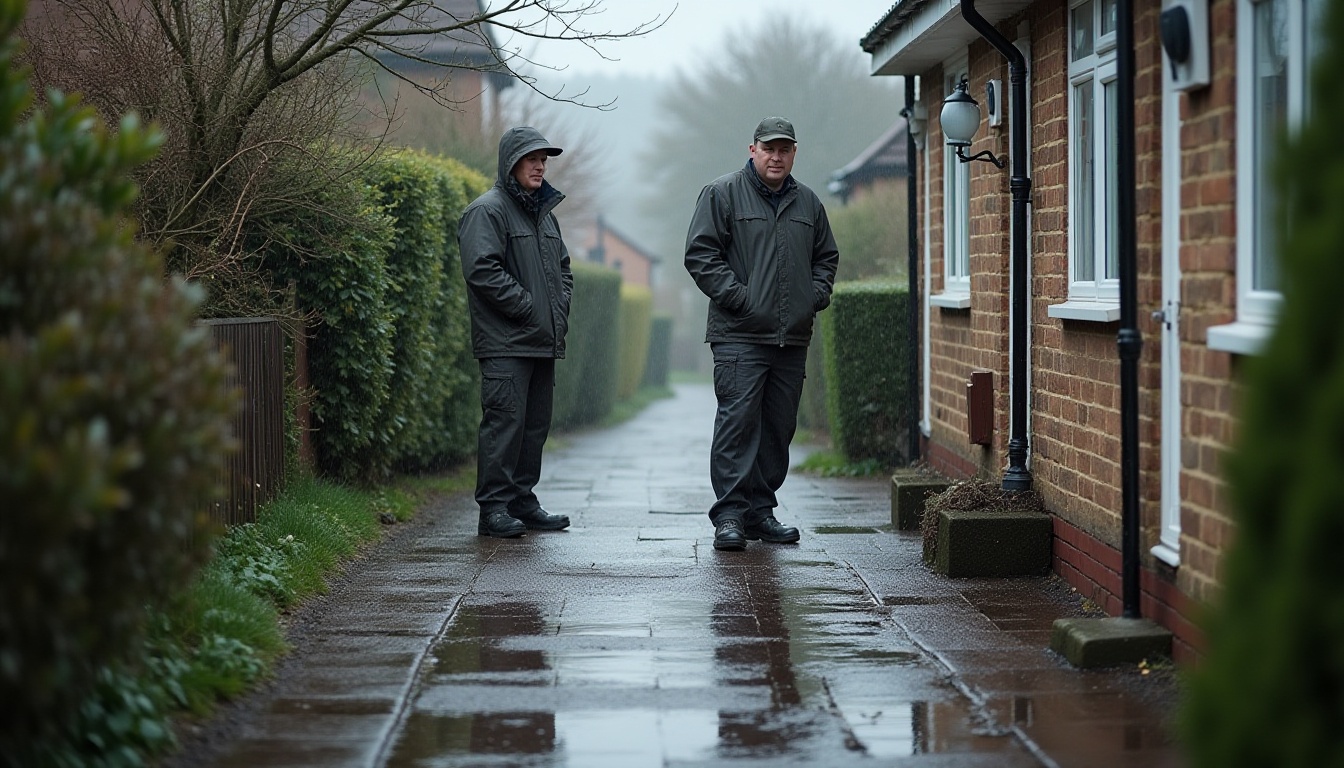
Heavy rain drainage problems can be confusing because water around a Plymouth property may come from more than one source. A private drain blockage, an overwhelmed public sewer, surface water on a road, groundwater and river or coastal flooding are different problems with different responsibilities. During wet weather, the most useful first task is to observe where the water is coming from and avoid assuming that every flooded gully needs a private drain unblocking company.
Heavy Rain Drainage Problems are not all private drain faults
Plymouth City Council’s flood reporting guidance separates public roads and drains, public sewers, rivers and the sea, groundwater and private drains. It states that South West Water is responsible for the public sewerage system in Plymouth, while floods caused by private drains are the property owner’s responsibility.
That division is particularly important during widespread rain. Heavy rain drainage problems affecting several properties or a public road may need a different response from wastewater backing up only through drainage serving one home.
Look at what is happening, not just where the water is
Note whether the water is clear rainwater or foul wastewater, whether it is rising from a private gully, flowing off a road, entering from higher ground or backing up through household fixtures. If neighbours have the same symptoms, record that too. Photographs taken from a safe position can help document the event.
Do not enter floodwater to investigate an inspection chamber. Depth, contamination and hidden hazards can be difficult to judge.
Reduce avoidable pressure on a backing-up system
If wastewater is already backing up inside the property, stop using affected toilets, showers, sinks, dishwashers and washing machines until you understand whether their discharge is contributing. Keep people and pets away from sewage contamination and protect belongings where this can be done safely.
For repeated heavy rain drainage problems, keep a record of dates, rainfall conditions, where water appeared and which fixtures were affected. A recurring pattern during storms can help distinguish a one-off obstruction from a wider capacity or surface-water issue.
Check whether sewer ownership changes who you contact
South West Water’s sewer responsibility information says homeowners normally look after drains serving their property within their land, while lateral drains beyond the boundary and sewers serving multiple properties are generally the water company’s responsibility.
If the backup appears to be on the public network, contact South West Water. If the problem is confined to private drainage, a drainage contractor may be appropriate. Establishing that distinction before paying for extensive investigation is worthwhile.
Prevent avoidable sewer blockages
Heavy rain and blockages can interact badly because restricted drainage has less capacity to move wastewater. South West Water’s blockage-prevention guidance says wipes and fats, oils and grease are major causes of avoidable blockages and advises keeping them out of the sewer system.
Good household habits cannot prevent every wet-weather incident, but they can remove one avoidable source of restriction.
Think about surface water around the property
Keep obvious private surface-water features such as accessible gullies and channels clear of leaves and loose debris where this can be done safely. Do not lift covers or undertake work in floodwater. If water repeatedly flows toward the building from hard landscaping, consider whether the site drainage and levels need professional assessment.
National sustainable drainage standards emphasise managing surface water and maintaining drainage features. For property alterations that add hard surfaces or roof area, drainage should be considered as part of the design rather than after problems appear.
When to document and report flooding
Plymouth City Council asks residents to report property flooding because local reports help the authority understand flood-risk issues and plan future work. Its page also directs people to the relevant organisation depending on the source. That makes it a useful reference after heavy rain drainage problems, even when the immediate incident has passed.
For an urgent danger to life, follow emergency-service advice rather than relying on a routine reporting form. The council specifically notes that its property-flooding form is for collecting information and is not an emergency notification route.
What a drainage contractor can and cannot solve
A contractor can investigate private drainage, clear blockages and, where justified, survey or repair defects. They cannot make a public sewer, river or highway drainage problem become private simply because water is visible on your land. Likewise, public flood-risk work will not necessarily solve a blockage inside a privately owned drain.
The practical response to heavy rain drainage problems is therefore to identify the likely source, establish responsibility, and then involve the right organisation or contractor.
After the weather improves, review the pattern
A dry day is often the best time to review what happened. Check whether normal drainage has returned, whether any private gully remains slow, and whether the same area has flooded in previous storms. If you took photographs, compare water levels and flow directions. Repeated incidents deserve a more systematic assessment than a one-off puddle.
Where the problem was clearly inside private drainage, a contractor can investigate condition and flow. Where water came from public land, a sewer, river or another source, keep using the relevant reporting route. The purpose of the review is to avoid paying for private drainage work that cannot address the real source.
If evidence points to a private drainage problem, you can browse drainage contractors serving Plymouth and compare services. For public sewer, highway, river, coastal or other flooding, use the reporting routes identified by Plymouth City Council and South West Water. Clear observations and the right contact are more useful than assuming every wet-weather problem has the same cause.