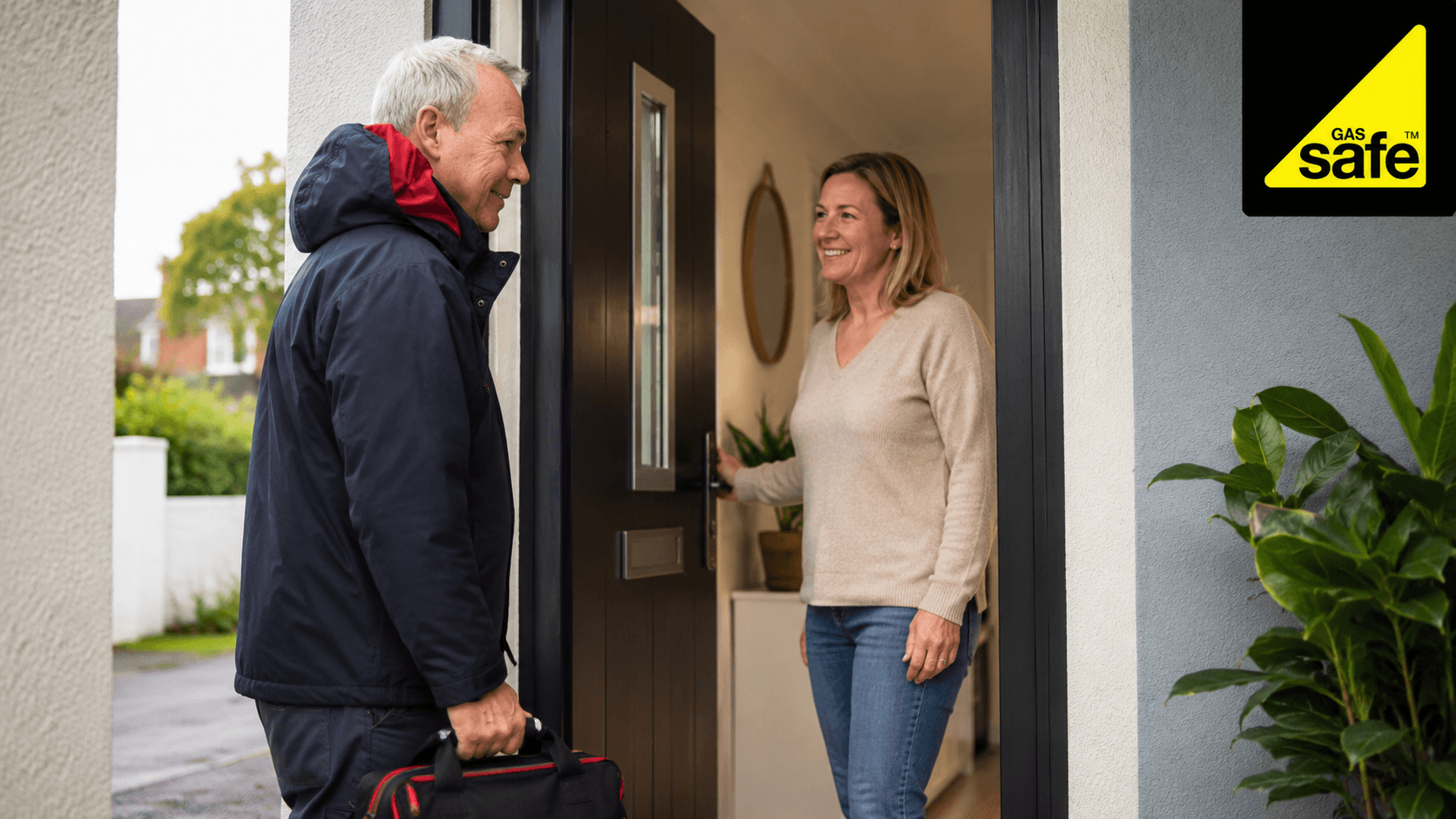
A boiler fault can leave a home without heating or hot water, but a gas appliance is not a suitable place for guesswork. Gas Safe boiler repairs must be approached differently from ordinary water-plumbing jobs because work on gas fittings is regulated. If you employ someone to repair, service or install a domestic gas boiler, they must be Gas Safe registered and competent for that specific work.
The distinction matters because a person can be an experienced plumber without being authorised to work on gas. Likewise, a Gas Safe registered engineer may hold qualifications for some categories of gas appliance but not others. Homeowners should check the engineer as well as the business.
Why Gas Safe boiler repairs require a registered engineer
The Health and Safety Executive states that anyone employed to work on gas appliances in domestic premises must be a Gas Safe registered engineer and competent in the relevant area. HSE’s domestic gas safety guidance also explains that an engineer’s competencies are shown on the back of their Gas Safe ID card.
This requirement covers work on the gas boiler itself. A non-registered plumber may carry out some separate “wet” heating work, such as water pipework or radiators, but HSE guidance is clear that work on the gas boiler and the final connection to it must be completed by a Gas Safe registered engineer.
Check the engineer, not just the company name
The Gas Safe Register is the official register of businesses legally permitted to undertake gas work. Before work begins, ask to see the engineer’s Gas Safe ID card. The front identifies the engineer, while the reverse lists the categories of work they are qualified to perform.
You can also use the Gas Safe Register’s Find and Check service to verify registration. If the person who arrives is different from the name you were expecting, check that individual rather than assuming the business registration automatically covers everyone.
What counts as boiler work?
A gas boiler combines water-heating functions with a gas-burning appliance. Some faults may eventually turn out to be in controls, circulation or another part of the heating system, but if diagnosis or repair requires work on the gas appliance, combustion system or gas fitting, a suitably registered engineer is required.
As a homeowner, you do not need to decide which internal component is at fault before calling. Describe the symptoms: for example, whether the heating or hot water has stopped, whether the appliance displays a fault code, whether the fault is intermittent, and whether anything unusual happened before it failed.
Do not remove covers or attempt to dismantle a gas boiler to investigate. The useful information is what you can observe safely from normal use.
Know the difference between a breakdown and a gas emergency
A boiler that will not produce heat is inconvenient, but a suspected gas leak or carbon monoxide incident is a different level of emergency. If you smell gas or suspect a gas escape, follow the current emergency guidance rather than waiting for an ordinary repair appointment.
HSE publishes the National Gas Emergency Service number for natural-gas leaks as 0800 111 999. Emergency numbers can change, so it is sensible to verify current guidance when needed. Do not use electrical switches, flames or anything that could create an ignition source if a gas leak is suspected.
If a carbon monoxide alarm activates or people experience symptoms that might indicate exposure, leave the affected area, seek urgent advice and follow emergency guidance. Do not continue using an appliance suspected of being unsafe.
What to ask when booking a boiler repair
When arranging Gas Safe boiler repairs, give the business the boiler make and model if you can read them without removing anything, describe the fault or display message, and explain whether you currently have heating or hot water. Ask whether the attending engineer is qualified for domestic boilers and whether there is a diagnostic or call-out charge.
- Confirm the engineer is Gas Safe registered for the relevant work.
- Ask how diagnostic time and labour are charged.
- Ask whether parts will be quoted before replacement where practical.
- Clarify whether the first visit is diagnostic or expected to include repair.
- Keep the final invoice and any safety or service documentation provided.
Do not rely on a logo alone
A Gas Safe logo on a van, website or advert is not a substitute for checking the register. Registration status and individual competencies can be verified online. The engineer should also be willing to show the Gas Safe ID card on request.
Be particularly cautious if someone says a non-registered person can complete the gas work and a registered engineer can simply “sign it off” later. HSE guidance specifically says this is not acceptable.
Routine servicing is different from waiting for a breakdown
Boilers can fail without warning, but maintenance should not be based solely on whether the appliance is currently producing heat. HSE strongly advises regular maintenance of gas appliances, flues and pipework by a Gas Safe registered engineer and recommends annual servicing.
A service is not the same as a repair call. It is a planned opportunity for an appropriately qualified engineer to inspect and maintain the appliance in accordance with relevant requirements and manufacturer instructions.
What if you rent your Plymouth home?
Landlords have specific gas-safety duties for appliances and gas fittings they provide. Tenants should normally report a boiler problem to the landlord or managing agent promptly rather than arranging unauthorised gas work themselves. HSE publishes separate guidance explaining landlord duties, including safety checks and maintenance.
If an engineer has switched an appliance off because it is unsafe, do not reconnect or use it. Follow the engineer’s instructions and contact the landlord where applicable.
Finding suitable local help
If you need a local plumbing or heating business, Plymouth Trade Finder can help you browse businesses serving Plymouth. For any gas boiler work, however, independently verify the individual engineer through the Gas Safe Register before allowing the work to proceed.
Registration is one part of choosing a business. You should also ask about availability, charges, experience with your type of appliance and what happens if additional parts or work are needed.
Keep gas work separate from DIY
Homeowners can safely do ordinary tasks such as using manufacturer controls or checking user-accessible settings described in the boiler manual. That does not extend to opening the appliance or carrying out gas work. If a reset does not resolve the fault, repeated attempts are not a substitute for proper diagnosis.
The key rule for Gas Safe boiler repairs is straightforward: if work is being carried out on a domestic gas boiler, use a Gas Safe registered engineer who is qualified for that category. Check the person who attends, describe the symptoms clearly and avoid dismantling or modifying the appliance yourself.
Handled this way, Gas Safe boiler repairs are not simply about getting the heating back on. They are about ensuring that diagnosis and repair are carried out by someone legally authorised and technically competent to work on the appliance safely.